



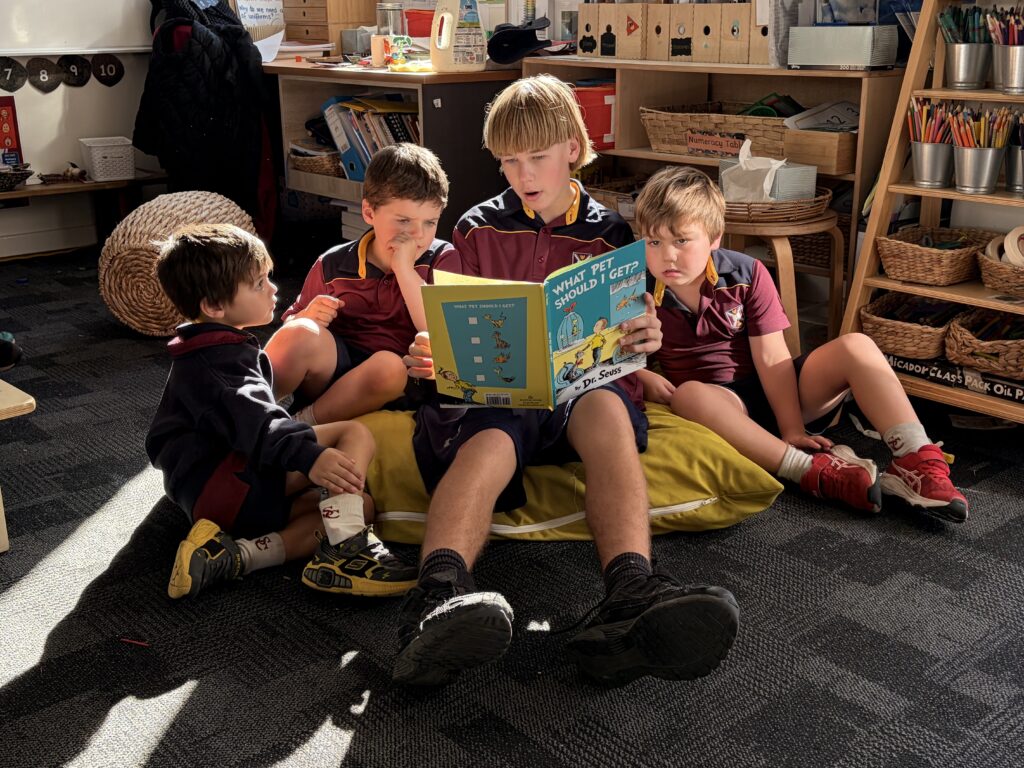



Boarding at Scotch is far more than accommodation; it is a formative experience that shapes character, broadens horizons and builds relationships that last a lifetime and is an essential part of how we prepare boys for life.
Over the last couple of weeks, I have been speaking with colleagues about what it means to operate a boarding school; both from a policy and community perspective. At the centre of these conversations was a simple but important question: ‘why boarding?’. It’s a question worth answering not just for those directly connected to our boarding house, but for our entire school community, including our Pre-K to Year 12-day families.
For many city-based families, the concept of sending their Year 7 son away to receive an education may seem foreign, if not heart wrenching. Yet, for many rural, regional and international families, boarding provides a safe residential haven and access to opportunities not readily available at home. It offers a rich and supportive environment in which boys live, learn and grow together. If equivalent schooling existed in their local communities, I have no doubt that many families would have their sons stay home.
My own experience working in a university residential college for over a decade reinforced this perspective. Each year, I met hundreds of students who had come through boarding schools, many of whom shared their reasons for choosing this pathway. Their stories consistently pointed to a desire for opportunity, independence and personal growth; qualities that boarding uniquely fosters.
Boarding has been part of Scotch College’s DNA since its earliest years, when boarders outnumbered day boys. Today, while smaller in proportion, our boarding community remains central to who we are.
The benefits are wide-ranging. Students gain access to a high-quality education with broad curriculum choice, along with outstanding sporting and co-curricular programmes. They develop independence, resilience and self-discipline, supported by a structured environment that fosters responsibility collaboration and mentorship. Boarders also benefit from strong wellbeing support, cultural diversity and an immersive learning experience that extends well beyond the classroom.
Research supports these outcomes. Studies across the UK and Australia suggest that over 80% of boarding students report feeling well prepared for university life, particularly in managing time, study routines and independent living. Research from the UK Boarding Schools’ Association indicates they are more likely to take on leadership roles, while Australian data highlights that boarding alumni often demonstrate higher levels of resilience, adaptability and cross-cultural competence. OECD-aligned studies on student wellbeing also suggest that students in structured residential environments report stronger peer connectedness and sense of belonging, both of which are linked to long-term success and life satisfaction.
At its heart, the defining strength of boarding is the formation of deep and enduring friendships. Living alongside one another sharing routines, challenges and achievements creates bonds of trust and belonging that are difficult to replicate in any other setting. These shared experiences form a lifelong network of friendship and support, often enduring well beyond school into university, careers and family life.
Boarding also enriches the experience of day boys. I have witnessed firsthand the benefits day boys have been afforded, forging lifelong friendships with boarders through staying on farms over the school breaks and in many cases then travelling the world with friendships formed while at school.
Ultimately, boarding at Scotch is far more than accommodation; it is a formative experience that shapes character, broadens horizons and builds relationships that last a lifetime and is an essential part of how we prepare boys for life.
Dr Alec O’Connell
Headmaster