

At Scotch College, we draw from a rich suite of academic, cognitive, behavioural and observational data to build a deeper understanding of each Scotch boy.
This data does not replace professional judgement but rather strengthens our ability as educators to build supportive relationships and respond to each student accordingly.
Over the last decade, the College has seen significant growth in the enrolments of high‑ability students as well as students with learning diagnoses. Supporting an increasingly diverse student body requires a multi-pronged approach.
From this growth, both the Inclusive Education and Enrichment teams have expanded across Pre-Kindergarten to Year 12. Both teams are highly collaborative, drawing on data points including standardised assessments, classroom performance, teacher observations and external reports to guide the identification of students who may require learning support and enrichment.
Using data effectively in identification?
A cornerstone of our system is the aptitude and performance data we receive from Academic Assessment Services. This data provides longitudinal insights through Standard Nine (or stanine) profiles in general reasoning, reading, writing, spelling and mathematics provided to the College.
From this data, we can identify and interpret growth trends, discrepancies between domains, and areas of exceptional performance where a student may require enrichment and extension beyond the mainstream curriculum.
Coordinated by our Inclusive Education Team, when data indicates lower reading stanines in our Middle School students, we follow up with diagnostic assessments such as MultiLit and the York Assessment of Reading Comprehension. These assessments help to determine the source of difficulty and further inform intervention.
Beyond the use of data to identify students, data is also used at Scotch to ensure your son is placed in an environment where he is challenged to grow. When it comes to the placement of English and Maths Essentials, decisions are guided by triangulated evidence drawn from a combination of Allwell testing, NAPLAN testing, reporting, teacher judgement and external assessments, ensuring targeted instruction and skills consolidation.
Scotch triangulates the same data sets within a three-tiered enrichment model to balance inclusion, talent development, and excellence.

An inclusive approach to enrichment
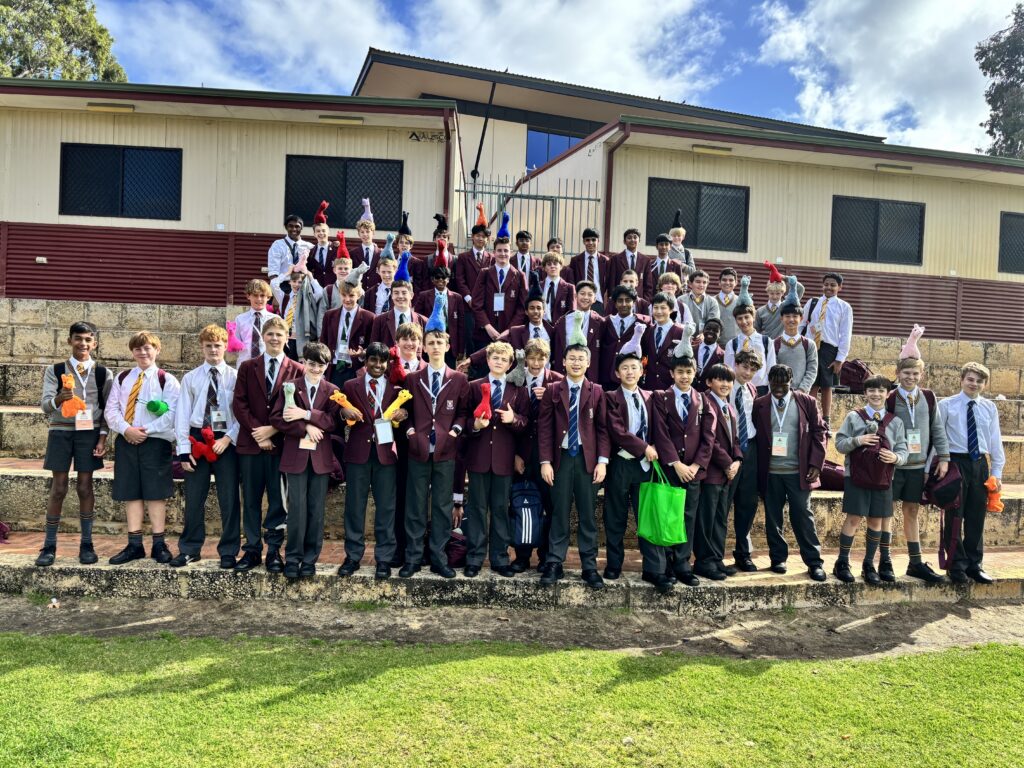
Scotch triangulates the same data sets within a three-tiered enrichment model to balance inclusion, talent development, and excellence. The first tier uses broad data points such as classroom performance, teacher observations, student curiosity, creativity, motivation, and self-nominations to identify a wide range of students for general enrichment opportunities, ensuring access to enrichment programmes is not limited to only the highest performers. The World Scholar’s Cup and our STEM Robotics programmes are flagship examples, providing rich and challenging learning opportunities open to many boys.
The second tier draws more on targeted data such as grades, classroom assessments, elective choices, and teacher recommendations to match students with subject-specific enrichment aligned to their strengths and passions. For example, students who excel in writing may be involved with the Young Writers Programme.
The third tier uses high-performance data such as standardised test results, competition outcomes, academic rankings and strong evidence of advanced readiness to select students for highly competitive opportunities such as the Have Sum Fun maths competition and the Da Vinci Decathlon. Used in this way, data helps us create a layered enrichment pathway that broadens participation, nurtures emerging talent, and identifies students ready for the most demanding academic experiences.
Multi‑exceptionality: two departments, one shared goal
Some students present with complex profiles—high ability paired with ADHD, ASD, or other diagnoses. These twice or ‘multi‑exceptional’ students often show asynchronous development, the uneven development across intellectual, emotional and physical skills, and this pattern is commonly seen in gifted learners.
For example, a student may participate in debating, presenting high verbal reasoning skills coupled with dysgraphia, a diagnosis where the individual finds written expression extremely difficult. This requires a dual‑lens approach that acknowledges the challenges this student will face in written assessments and finds opportunities for this student to showcase and develop their advanced oral skills.
While Inclusive Education focuses on reducing barriers to learning through executive functioning support, organisation, and engagement strategies. Enrichment ensures students remain intellectually stimulated and extended where appropriate.
Together, the complementary approaches create a balanced programme nurturing strengths while supporting challenges. By bringing together long‑term data, specialist assessment, teacher expertise and interdepartmental collaboration, Scotch ensures that every boy—whether high performing, highly able, needing support, or navigating multiple complexities—is seen and has the ability to thrive at Scotch.
Mr Sam Sterrett Head of Enrichment (PK–12)
Ms Gill Youngleson Head of Inclusive Education (Y6–12)